

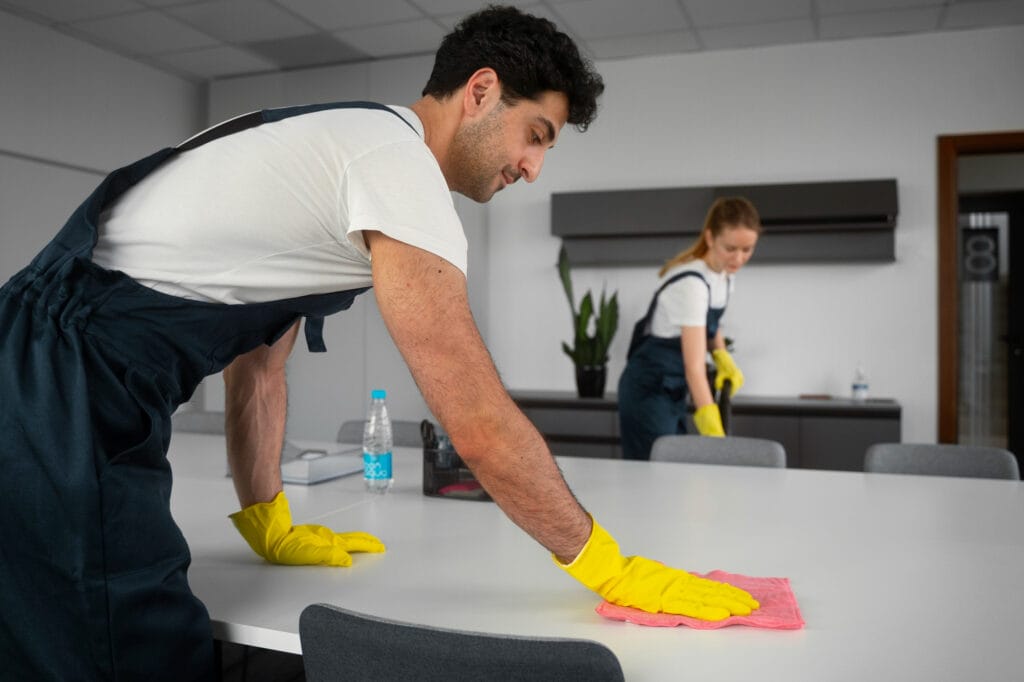
The building work is finished. The tools are gone, the skip has been collected, and the room looks broadly the way you imagined it would. So you get the hoover out, wipe the surfaces down, and think you’re done.
But construction dust cleaning is not as simple as an ordinary household clean. Fine dust from renovation work can remain airborne for hours, settle in hidden areas and reappear on surfaces days later. That’s why specialist equipment and the right cleaning approach make such a difference.
Two weeks later there’s a fine grey film back on every shelf. You clean it again. It returns.
This is the single most common experience people have after renovation work, and it happens because construction dust does not behave like household dust. It’s a different material, it settles differently, and it needs a different approach to remove. That’s why after builders cleaning in Essex is treated as a specialist service rather than an extended version of a normal clean.
Here’s what’s actually going on.
Construction Dust Is Not Household Dust
Household dust is mostly organic skin cells, fabric fibres, hair, pollen, soil tracked in from outside. It’s relatively heavy, it settles quickly, and a vacuum and a damp cloth deal with it.
Construction dust is mineral. Depending on the work done, it can contain silica from concrete, brick and tile cutting; gypsum from plasterboard; wood dust from carpentry; cement particles; and fine debris from sanding, grinding or drilling.
Three things make this problematic.
It’s far finer: Much construction dust is small enough to stay airborne for hours after being disturbed. That means it doesn’t settle once and stay put. It circulates, resettles, and reappears on surfaces you’ve already cleaned.
It’s abrasive: Mineral particles have hard edges. Wiping them across a worktop, a new bath or a glass shower screen with a dry cloth doesn’t remove them so much as drag them, and that’s how brand-new surfaces pick up fine scratches during their first clean.
It’s chemically reactive: Cement and plaster dust is alkaline. Left on aluminium window frames, chrome fittings or certain natural stones, it can etch or discolour over time. Delay makes the damage harder to reverse.
The Health Angle Most People Overlook
Respirable crystalline silica produced whenever concrete, brick, mortar or tile is cut, drilled or ground is a recognised occupational health hazard in the UK construction industry. It’s precisely the fraction of dust that’s fine enough to reach deep into the lungs, and long-term exposure is associated with serious respiratory disease.
For a homeowner doing one post-renovation clean, the exposure risk is obviously far lower than for someone cutting concrete daily. But it isn’t nothing, particularly if you’re sweeping dry debris, blowing dust around with a domestic vacuum that lacks proper filtration, or spending hours in an unventilated room.
Wood dust carries its own issues, especially hardwood dust. And if the property is older, disturbed material may contain lead paint particles or, in buildings from the wrong era, asbestos-containing debris which requires licensed handling and is absolutely not a DIY job.
A specialist team works with the right masks, the right filtration and the right sequence. That protection matters more than most people assume.
Why a Domestic Vacuum Makes It Worse
This is the part that catches people out. Standard household vacuums are designed for organic dust. Push fine mineral dust through one and two things happen.
First, a significant proportion of the finest particles pass straight through the filter and out of the exhaust back into the air, at speed, to settle again across the room. You haven’t removed the dust. You’ve redistributed it.
Second, the dust clogs filters and damages motors. Plenty of people finish a post-renovation clean-up with a vacuum that never works properly again.
Professional after-builders cleaning uses HEPA-filtered industrial vacuums that capture fine particulate rather than recirculating it, along with wet methods that trap dust instead of lifting it into the air.
Where Construction Dust Actually Hides
Because it travels as an airborne cloud rather than falling straight down, construction dust reaches places ordinary dirt never does. A proper builders clean covers all of the following, and it’s the reason the job takes so much longer than people expect:
- Tops of door frames, picture rails, wardrobes and kitchen units
- Inside light fittings, extractor vents, air vents and radiator fins
- Window runners, hinges, frames and trickle vents
- Inside cupboards, drawers and newly fitted appliances
- Behind and beneath fitted units and appliances
- Electrical sockets, switch plates and skirting board edges
- Carpet and rug fibres, where fine dust works deep down and normal vacuuming won’t lift it
- Loft hatches, stairwell ledges and any high horizontal surface
Miss any of these and the dust simply migrates back out over the following weeks. That’s the recurring film people keep re-cleaning.
Sequence and Method Matter
A specialist clean isn’t just more thorough, it’s ordered differently.
It works top-down, so dust dislodged from high surfaces falls onto areas not yet cleaned. It removes loose debris before any wet work, because introducing water to heavy dust creates a cement-like paste that’s far harder to shift. It uses the correct products for new materials, since freshly installed surfaces often need different treatment to established ones; some sealants and finishes are still curing and react badly to aggressive chemicals.
It also usually happens in two stages. An initial rough clean removes the bulk of debris, then a final detailed clean handles the fine residue once remaining airborne dust has settled. Compress this into a single pass and you’ll be cleaning again a fortnight later.
Then there’s paint splatter, adhesive residue, plaster splashes, silicone smears and protective film left on appliances and glass all of which need removing without damaging the surface underneath. Getting that wrong on a new worktop or a freshly fitted shower screen is an expensive mistake.
The Practical Case for Bringing Someone In
You can clean up after builders yourself. Plenty of people do. But it typically takes several full days, requires equipment you probably don’t own, carries some health risk, and frequently has to be repeated because the fine dust wasn’t properly captured the first time.
A specialist team does it once, properly, with the right kit and you get the finished property you paid for, rather than a nagging grey film on everything for the next two months.
After Builders Cleaning Across Essex
Fast Deep Clean provides after-builders and post-renovation cleaning across Chelmsford, Basildon, Colchester, Southend-on-Sea, wider Essex and East London. We work to a detailed checklist, use professional filtration equipment, and treat new surfaces with the care they need. Every cleaner is fully vetted, trained and insured.
If your project is nearing completion, get in touch for a free quote and we’ll scope the job around your finish date.